Urban Home Inspections offers professional home inspections for buying, selling, or maintaining your property. Our certified inspectors explain your home’s condition, outline potential repairs, and provide a detailed Spectora report (HTML/PDF) with explanations and pictures for your reference.
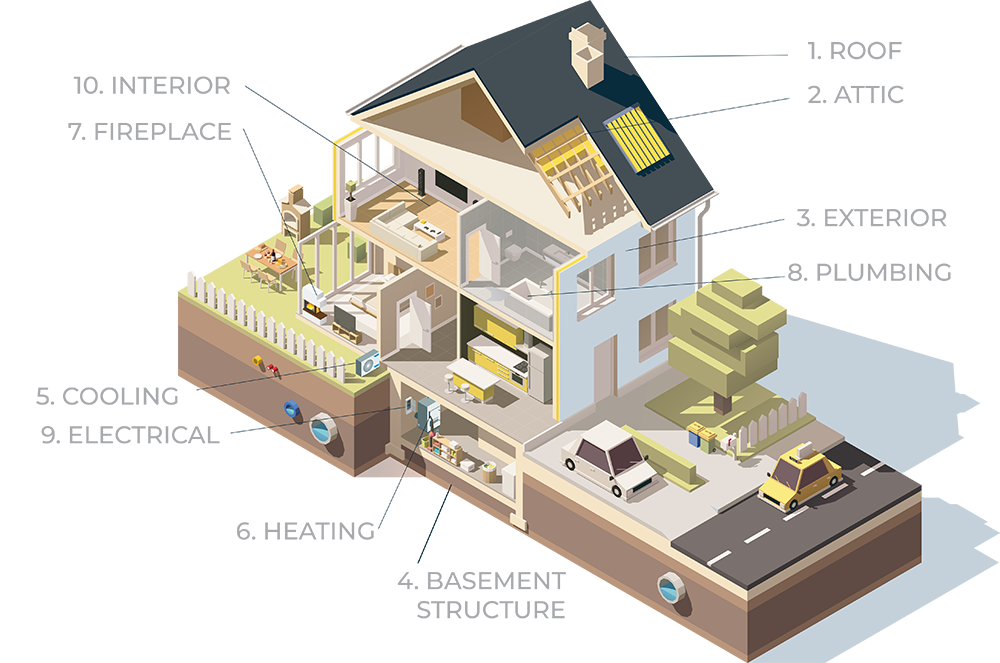
Foundations, grading & drainage, basements, walkways, and floor, wall and ceiling structures.
Roof coverings, drainage systems, flashings and skylights, chimneys and other roof penetrations.
Service entrance and panels, branch circuits, connected devices and fixtures, smoke and carbon monoxide detectors, and making sure your outlets are GFCI-protected.
Fixtures and faucets, water supply systems, drain, waste and vent systems, water heater, vents, and any sump pumps or fuel storage and distribution systems.
Heating and cooling equipment, ducts, vents and flues.
Dishwasher, garbage disposal, range hood, range or oven, cooktop, microwave, trash compactor, bathroom exhaust fans, garage door operator, and other built-in appliances.
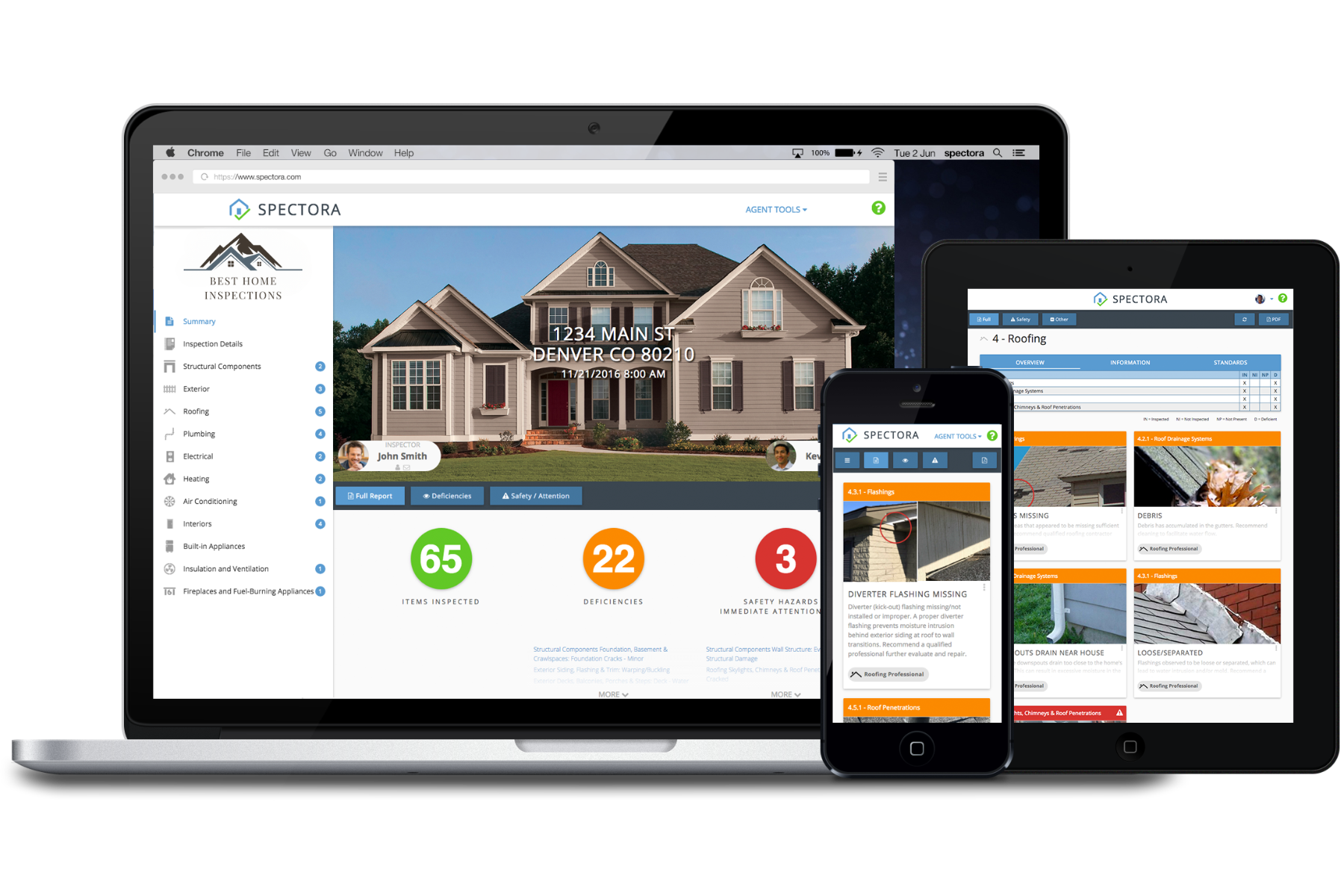
Red and orange annotations highlight key areas in your report's photos for effortless understanding.
Reports are sectioned by area (Interior, Electrical, etc.) for a clear and easy-to-follow inspection review.
Make informed decisions quickly with our guaranteed 24-hour inspection report delivery.
Review your inspection findings anytime, anywhere with our mobile-friendly reports.
Get the most out of your inspection with a free consultation to discuss findings, recommendations, and next steps.
Agents can quickly copy and paste information from the report using the Repair Request Document Generator, in order to request concessions or repairs from sellers.
Buying or selling a home can be a stressful experience, but we’re here to ensure you know what to expect during your home inspection.
A home inspection is a comprehensive review of a property’s condition, typically performed before buying or selling a home
Our professional inspector will examine the major systems and components of the home, including:
After the Inspection
Preparing for a home inspection involves ensuring access, making minor repairs, providing documentation, and being ready to answer questions. This helps the process go smoothly and can lead to a more favorable inspection report
The following would ensure a more comprehensive and favorable report
A home inspection is not a pass/fail test. Instead, it’s a professional assessment of a property’s condition. The inspector’s job is to document any issues—ranging from minor cosmetic concerns to major structural or safety problems—and provide a detailed report. There is no official “fail,” but serious issues can affect the sale or require repairs before closing.
Yes, you can technically skip a home inspection, but it’s not usually recommended. Home inspections are not legally required in most real estate transactions, so buyers may choose to waive them, especially in competitive markets where sellers prefer offers with fewer contingencies.
Skipping a home inspection exposes you (as a buyer) to significant risks. It’s generally best to get an inspection; even if you’re buying new construction or in a hurry, so you know the true condition of the property and can make informed decisions.
If you’re considering waiving the inspection, We recommend discussing alternatives with your real estate agent,
No, a home inspector should not make repairs on a property they are inspecting. The primary role of a home inspector is to provide an unbiased, professional assessment of the property’s condition. Making repairs would be a conflict of interest and is generally prohibited by industry ethics and standards.
A home inspection does not directly affect the appraisal, but serious issues found during inspection can lead to lender-required repairs, conditional appraisals, or lower valuations if defects are visible or impact habitability. Addressing inspection findings proactively helps ensure a smoother transaction and protects your investment.